Few things are as frustrating as an unexpected power outage, but even more so is having a generator ready to go, only to find your critical devices can’t plug in. Understanding Generator Plug Compatibility & Selection is far more than just matching shapes; it's about ensuring a safe, efficient, and reliable power connection that protects both your equipment and your household. Think of it as the handshake between your generator's robust output and your home's thirsty appliances—get it wrong, and you risk everything from tripped breakers to serious electrical hazards.
This guide cuts through the confusion, offering a clear path to understanding the connectors that power your life when the grid goes dark. We’ll explore the common types, crucial safety considerations, and even a glimpse into the future of generator connections, ensuring you're always prepared.
At a Glance: Your Generator Plug Compatibility Checklist
- Match Amps & Volts: Always align plug/receptacle ratings with your generator’s output and appliance needs.
- NEMA Codes Are Key: Familiarize yourself with NEMA standards (e.g., L14-30, 5-20R) to identify plug types.
- Twist-Lock for Security: Opt for twist-lock plugs (L-type) for applications where vibration or accidental disconnections are a concern.
- Inspect Regularly: Check all plugs, cords, and receptacles for damage before and after use.
- Grounding is Non-Negotiable: Ensure your generator and connections are properly grounded to prevent shock hazards.
- Avoid Risky Adapters: Use only approved, correctly rated adapters; never force a fit or bypass safety features.
- Professional Installation for Whole-House: Large generator systems and transfer switches often require expert setup.
Decoding the Essentials: Why Plug Compatibility Matters So Much
At its core, plug compatibility isn't just about whether the prongs physically fit into the holes. It's a precise electrical language that speaks to voltage, amperage, and grounding. Each generator plug type is engineered for a specific power delivery role, acting as a crucial gatekeeper for the flow of electricity. Mismatched plugs are a recipe for trouble—from simply not working to overheating, damaging appliances, or even causing fires.
Consider your generator as a mini power plant. It produces electricity at certain voltages (like 120V or 240V) and can supply a maximum current (amperage, like 30A or 50A). Your plugs and receptacles are designed to safely handle these specific power levels. If you try to draw too much current through a plug rated for less, it's like trying to funnel a river through a garden hose—pressure builds, and something's going to burst.
This understanding is foundational, impacting not just the immediate connection but the long-term reliability and safety of your entire temporary power setup.
A Field Guide to Common Generator Plug Types
The world of generator plugs can seem a bit like alphabet soup, but once you break down the NEMA (National Electrical Manufacturers Association) classifications, it becomes much clearer. These codes tell you exactly what kind of power a plug is designed to handle.
The Household Mainstays: NEMA 5-15R and 5-20R
These are likely the most familiar outlets you’ll encounter, mirroring the standard receptacles in your home.
- NEMA 5-15R (15 Amps, 120 Volts): This is your ubiquitous household outlet. Generators often include several of these to power everyday electronics, lights, and small appliances. They're perfect for basic needs but can easily be overloaded if too many high-draw devices are connected.
- NEMA 5-20R (20 Amps, 120 Volts): Visually similar to the 5-15R, but often with a "T" shaped neutral slot or an additional horizontal slot for the hot prong. This allows it to accept both 15-amp and 20-amp 120V plugs. Generators use these for slightly higher amperage tools or appliances, offering a bit more headroom than the standard 15-amp. The Walfront Double Industrial Plug Socket, for instance, provides a robust, wear-resistant solution with brass contacts and 5-20R standard alignment, capable of enduring over 20,000 insertion/removal cycles—ideal for demanding workshop or generator applications where reliability is paramount.
Powering Medium Demands: The L5-30 Twist-Lock
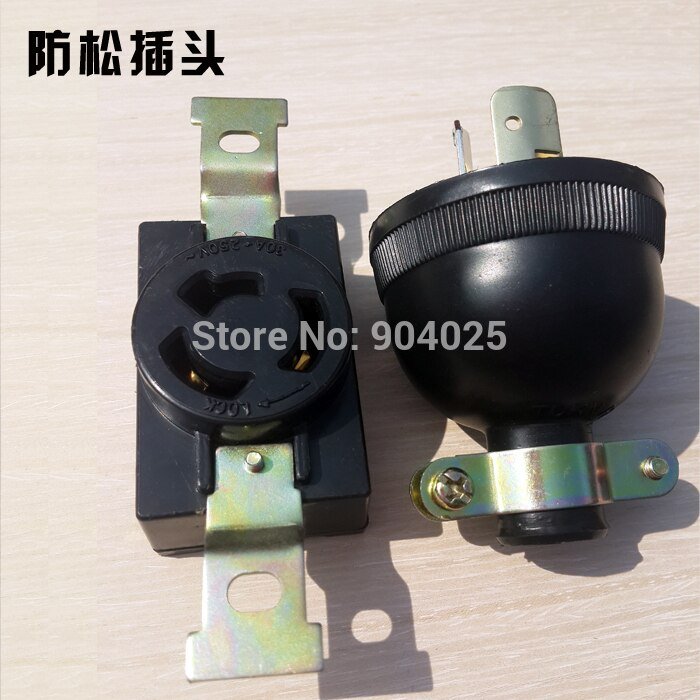
Stepping up in capability, the "L" in L5-30 signifies a "locking" or "twist-lock" plug.
- L5-30 (30 Amps, 120 Volts): This plug is a common sight on medium-sized portable generators, especially those used for RV hookups or powering a smaller set of critical household appliances. The twist-lock mechanism is a game-changer, providing a secure connection that resists vibration and accidental disconnections, ensuring your power stays on even if the generator gets jostled. It’s perfect for maintaining power to essentials without the risk of an unexpected unplug.
Your Home Backup Workhorse: The L14-30 Twist-Lock
When you're looking to power a wider array of home circuits, the L14-30 becomes essential.
- L14-30 (30 Amps, 120/240 Volts): This four-prong twist-lock plug is designed for home backup generators and connecting to transfer switches. The key here is its ability to deliver both 120 volts (for standard household circuits) and 240 volts (for larger appliances like well pumps or central air conditioners, if your generator can handle the load). It’s a versatile connector for comprehensive home backup. The ELEGRP L14-30R Flush-Mount Locking Receptacle exemplifies the quality you should look for. Its heavy-duty nylon body resists impacts and chemicals, while single-piece brass contacts minimize friction and overheating for superior conductivity. Similarly, the ELEGRP Locking Plug and Receptacle Set provides a complete 30-amp, 125/250-volt, 3-pole 4-wire grounding connection, featuring an insulated nylon housing, single-piece brass blades, and a tight-lock design with separate wire tubes to prevent shorting. These features make it ideal for permanent or semi-permanent generator installations, providing peace of mind during outages.
Heavy-Duty Home & Beyond: The L14-50 Twist-Lock
For those with larger homes or significant power demands, the L14-50 answers the call.
- L14-50 (50 Amps, 120/240 Volts): This robust plug is found on more powerful whole-house generator systems. With 50 amps at 120/240 volts, it can handle higher-demand appliances simultaneously, making it suitable for larger homes or extensive commercial backup needs. Like the L14-30, it’s a four-prong twist-lock for secure, reliable, dual-voltage power.
Industrial Strength: The L6-50 Twist-Lock
While less common for residential backup, the L6-50 has its niche.
- L6-50 (50 Amps, 240 Volts): Primarily used in industrial or commercial settings, this plug delivers 50 amps exclusively at 240 volts. It's often seen connecting heavy-duty equipment like welders or plasma cutters, where high-voltage, single-phase power is required without a 120V component.
Quick Reference Guide to NEMA Generator Plugs
| NEMA Configuration | Voltage | Amperage | Prongs | Locking | Common Use Cases |
|---|---|---|---|---|---|
| 5-15R | 120V | 15A | 3 | No | Standard household electronics, small appliances, lighting |
| 5-20R | 120V | 20A | 3 | No | Higher amperage tools, slightly larger appliances |
| L5-30 | 120V | 30A | 3 | Yes | Medium-sized portable generators, RV hookups, portable tools |
| L14-30 | 120V / 240V | 30A | 4 | Yes | Home backup generators, transfer switches |
| L14-50 | 120V / 240V | 50A | 4 | Yes | Larger whole-house generators, high-demand appliances |
| L6-50 | 240V | 50A | 3 | Yes | Industrial equipment, welders, plasma cutters |
Straight Blade vs. Twist-Lock: Securing Your Connection
When you look at generator outlets, you'll quickly notice a fundamental design difference: straight blade versus twist-lock. This isn't merely aesthetic; it's a critical safety and reliability feature.
The 'Set It and Forget It' Security of Twist-Locks
Twist-lock plugs, easily identified by the "L" in their NEMA designation (like L14-30), are engineered for security. Once inserted, you twist the plug to engage a locking mechanism, creating a secure connection that won't easily vibrate loose or accidentally pull out. This feature is indispensable in situations where:
- Vibration is present: Generators, by their nature, vibrate. A loose connection can lead to arcing, overheating, and power interruptions.
- Accidental disconnections are costly: Losing power to a critical device during an outage can be more than just an inconvenience; it can be dangerous or damaging.
- Outdoor environments are a factor: Secure connections are less prone to moisture or debris intrusion if the plug is properly seated and sealed.
For any semi-permanent or critical generator setup, twist-lock connections are the gold standard for reliability.
When Straight Blades Are Okay (and When They're Not)
Standard straight blade plugs (like the 5-15R or 5-20R) are perfectly fine for connecting low-power, non-critical items directly to your generator, especially if the generator is stationary and unlikely to be bumped. Think of charging phones, running a fan, or powering a few lights. They're convenient for casual use and temporary connections.
However, relying solely on straight blade connections for substantial power distribution, or in high-vibration environments, introduces risk. They can easily become dislodged, leading to momentary power loss or, worse, electrical arcing as the connection wiggles. Always use them judiciously and with an understanding of their limitations.
Choosing Your Power Path: A Step-by-Step Selection Guide
Selecting the right generator plug isn't a shot in the dark. It’s a methodical process that ensures safety, efficiency, and compatibility.
Step 1: Know Your Generator's Output
Before you even think about plugs, understand what your generator can deliver. Check the manufacturer's plate or manual for:
- Running Watts & Starting Watts: This tells you the continuous power it can supply and the surge capacity for starting motors.
- Voltage Output: Typically 120V or 120/240V.
- Amperage Output for Each Receptacle: Your generator will have different receptacles, each with its own amperage rating. Don't assume all outlets are the same. For example, a generator might have several 5-20R outlets, but only one L14-30.
Step 2: Understand Your Load Requirements
Next, list the appliances and devices you intend to power. For each item, note its voltage and amperage or wattage.
- 120V Appliances: Most standard household items.
- 240V Appliances: Well pumps, central air conditioning units, electric water heaters, electric clothes dryers, some electric ranges. These will require a generator capable of 120/240V output and a corresponding L14-30 or L14-50 connection.
- Total Amperage: Sum the running wattage of all devices you plan to operate simultaneously, then factor in starting watts for motors. This will tell you if your chosen plug and generator circuit can handle the cumulative load.
Step 3: Factor in the Environment and Application
Where and how will you be using your generator?
- Portable Use: For camping, tailgating, or small job sites, standard 5-15R/5-20R outlets and perhaps an L5-30 for an RV might suffice.
- Home Backup: If you’re connecting to a transfer switch, you’ll almost certainly need an L14-30 or L14-50 inlet box, depending on your home's electrical service and generator size. These connections need to be robust and weather-resistant. For demanding industrial or workshop applications, solutions like the Walfront Double Industrial Plug Socket offer wear-resistant PA66 material and brass contacts, capable of withstanding environmental stress and heavy usage.
- Commercial/Industrial: Heavy equipment often requires higher amperage 240V-only connections like the L6-50.
Step 4: Prioritize Safety and Code Compliance
This isn't just a recommendation; it's a mandate.
- Grounding: All generator connections must be properly grounded. Many generators require an external grounding rod.
- Overload Protection: Ensure your plugs, cords, and generator circuits have appropriate overcurrent protection.
- Local Electrical Codes: Always consult and comply with local electrical codes and regulations. For larger or permanent installations, professional installation is not just recommended, it's often legally required.
The Adapter Conundrum: When to Use Them (and When to Avoid)
Adapters can be incredibly convenient, bridging the gap between different plug types. However, they are also a common source of confusion and, if misused, serious hazards.
Smart Adapters for Broader Compatibility
Sometimes, your generator might have a 30A L14-30 outlet, but you only need to power standard 120V household items. In such cases, a purpose-built, high-quality adapter can be useful. For instance, the HOLEPU Adapter allows you to convert a 30A L14-30P inlet into multiple 5-15R/5-20R (or 6-15R/6-20R) female outlets. This broadens compatibility for temporary power setups, allowing you to connect household-style receptacles to a 30-amp generator output. These adapters should always be rated for the voltage and amperage they are converting and ideally include built-in circuit breakers for added protection. They must be used in alignment with local electrical codes and proper grounding procedures.
The Dangers of DIY and Unapproved Adapters
Here’s the golden rule: never modify plugs or cords, and avoid cheap, uncertified, or homemade adapters. These often lack proper grounding, overload protection, or sufficient wire gauge for the current they’re meant to carry. The risks include:
- Overheating and Fire: Underrated wiring or poor connections can generate excessive heat.
- Electrical Shock: Lack of proper grounding is a direct path to electrocution.
- Damage to Appliances/Generator: Incorrect voltage or current can fry sensitive electronics.
Always look for adapters that are clearly labeled, UL-listed (or equivalent safety certification), and specifically designed for generator use.
Essential Accessories for Generator Plug Management
Beyond the plugs themselves, a few key accessories can significantly enhance the safety, longevity, and convenience of your generator setup.
Protecting Your Investment: Hole Plugs and Seals
Generators, especially stationary ones, have various openings for wiring, ventilation, and mounting. While necessary, these can also become entry points for pests, debris, and moisture—all detrimental to internal components. A Hole Plug Kit, like those designed for Generac 10-24 kW air-cooled units, provides base hole adapters to seal these openings effectively. This simple accessory protects wiring, insulation, and sensitive electronics from environmental intrusion, extending your generator's lifespan and ensuring reliable operation.
Beyond Power Connections: The Generator Maintenance Toolkit
Your plugs are only as good as the power source they're connected to. Regular generator maintenance is crucial, and a well-equipped toolkit is part of that. While spark plugs aren't direct "power connections," they are vital for your generator's operation. A Spark Plug Socket, often dual-ended (16-18 mm) with a foldable, rotating T-handle, makes installing and removing spark plugs easy, even in tight spaces. This specialized tool prevents damage to sensitive spark plugs and engine components, ensuring your generator starts reliably when you need it most.
Building a Safer Generator Setup: Critical Safety Tips
Operating a generator carries inherent risks, but most can be mitigated with careful planning and strict adherence to safety protocols. This includes every aspect of your All about generator plugs setup.
Matching Ratings: The Golden Rule
As emphasized earlier, always match the voltage and amperage ratings of your generator, plugs, cords, and appliances. An underrated cord or plug is a fire hazard waiting to happen. If you're unsure, err on the side of caution and use components with higher amperage ratings than your expected load.
Grounding: Non-Negotiable Protection
Proper grounding protects against electrocution if there's an electrical fault.
- Generator Grounding: Many portable generators require a separate grounding rod driven into the earth, connected to the generator's frame. Consult your generator's manual for specific instructions.
- Transfer Switch Grounding: If your generator is connected to your home's electrical system via a transfer switch, the system's grounding should extend to the generator connection.
Never operate a generator without ensuring it's properly grounded.
Inspecting for Wear and Tear
Before and after each use, perform a quick visual inspection of all plugs, cords, and receptacles.
- Look for Fraying or Cuts: Damaged insulation can expose live wires.
- Check for Cracks or Discoloration: Heat damage or physical stress can compromise plastic housings.
- Test for Loose Connections: A wobbly prong or loose receptacle indicates a potential hazard.
- Corrosion: Especially in outdoor environments, corrosion on metal contacts can lead to poor conductivity and overheating.
Replace any damaged components immediately. Don't take chances.
Proper Placement: Ventilation is Key
Never operate a generator indoors or in an enclosed space, even with doors and windows open. Generators produce carbon monoxide, an odorless, colorless, and deadly gas. Always place your generator outdoors, at least 20 feet from any building openings, with its exhaust pointed away from occupied structures.
The Future of Power: Innovations in Generator Plug Technology
Generator technology is constantly evolving, and plug compatibility is no exception. As our reliance on reliable power grows, so does the demand for smarter, safer, and more resilient connection solutions.
- Smart Plugs: Monitoring & Control: The rise of smart home technology is extending to generators. Future generator plugs could integrate sensors to monitor power loads, voltage stability, and even alert you via a mobile app if a connection is compromised. Imagine being able to remotely check your generator's output and even shed non-essential loads directly from your phone.
- Built Tough: Enhanced Weather-Resistant Designs: With increasing climate unpredictability, weather-resistant designs are becoming standard. Expect improved sealing, UV-resistant materials, and robust constructions that protect contacts from moisture, dust, and extreme temperatures, ensuring longevity and reliability in harsh conditions.
- Seamless Integration with Transfer Switches: The integration of plugs and transfer switches is becoming more streamlined. Standardization efforts aim to simplify automatic power switching during outages, making generator backup as easy as flipping a switch—or even fully automated. This means less fumbling with cords and more reliable power delivery when you need it most.
- Modular Connection Systems: Innovations in plug design might lead to more modular systems, allowing for easier swapping of different connectors without complex rewiring. This could provide greater flexibility for users with diverse power needs.
Connecting It All: Professional Installation & Why It Matters
For basic, temporary setups where you’re just plugging in extension cords to the generator’s onboard outlets, a DIY approach with careful attention to safety guidelines is feasible. However, when you start talking about connecting your generator to your home’s electrical system via a transfer switch, professional installation isn't just a good idea—it's often a requirement and always the safest choice.
Licensed electricians understand the intricacies of local codes, proper grounding, load balancing, and the nuances of safely integrating a generator into your existing electrical panel. They ensure your system is up to code, functions flawlessly, and, most importantly, protects your home and family from electrical hazards like backfeeding the grid, which can be lethal to utility workers. For anything beyond plugging in a few items, invest in expert help.
Your Next Steps to Confident Generator Power
Navigating generator plug compatibility doesn’t have to be intimidating. By understanding the basics of NEMA classifications, voltage, amperage, and the critical difference between straight blade and twist-lock connections, you’re well on your way to a safer, more reliable power backup system.
Take a moment to:
- Review your generator's manual: Pinpoint its exact power output and available receptacle types.
- Assess your critical loads: Know precisely what you need to power and its requirements.
- Inspect your current connections: Check for wear, damage, or improper setup.
- Upgrade where necessary: Invest in high-quality, appropriately rated plugs, cords, and, if needed, adapters.
- Consider professional help: Especially for whole-home integration.
Being prepared means more than just owning a generator; it means having the knowledge and the right connections to put that power to safe and effective use.