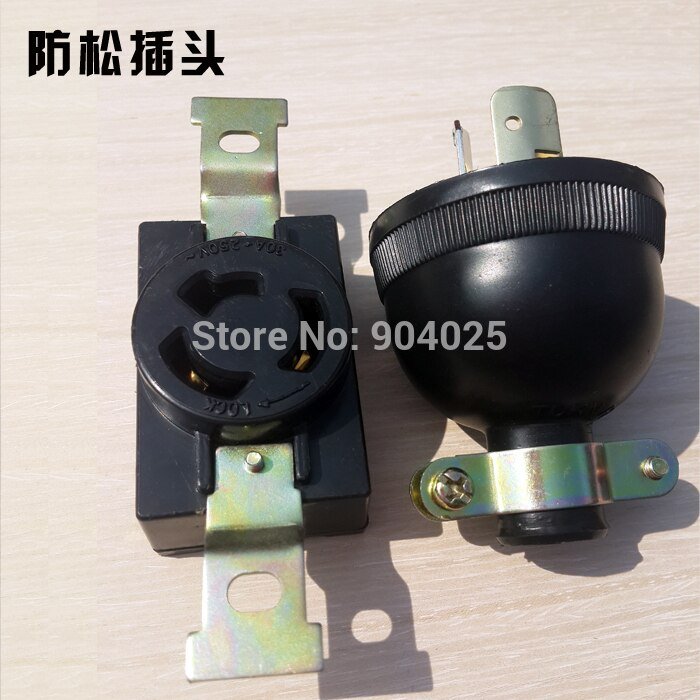
When you rely on a portable generator for anything from tailgating to powering your home during an outage, the connection point isn't just a detail—it's the linchpin of safe and effective power delivery. Understanding Generator Plug Types & Specifications is absolutely critical to avoid hazards, ensure compatibility, and get the most out of your power investment. Without the right plug, your generator is just an engine, and your appliances are useless.
This isn't about memorizing obscure electrical codes; it's about making informed decisions that keep you, your equipment, and your property safe. Let's demystify these essential connectors, giving you the confidence to power up correctly every time.
At a Glance: Key Takeaways for Generator Plugs
- Matching is paramount: Always align the plug's voltage and amperage rating with both your generator's output and the appliance's requirements.
- Twist-Lock for security: These plugs (NEMA L-series) physically lock into place, preventing accidental disconnection, especially crucial for high-power or vibrating applications.
- Straight blade for standard use: Common household-style plugs (NEMA 5-series) are great for general electronics but lack locking security.
- Know your NEMA: The National Electrical Manufacturers Association (NEMA) defines the standards for plugs in the U.S., making it easy to identify compatibility.
- Voltage matters: Generators can produce 120V, 240V, or both. Your plug must match the voltage your devices need.
- Safety first: Never force a plug, use damaged cords, or bypass safety features with improper adapters.
- Professional help: For whole-house systems or complex setups, professional installation of transfer switches and appropriate plugs is essential.
Why Your Generator Plug Choice Is More Than Just a Connection
Think of a generator plug not just as a simple connector, but as a critical gateway regulating the flow of electricity. It’s the physical interface that ensures your generator’s raw power is safely and efficiently transferred to your home, RV, tools, or appliances. Get it wrong, and you risk everything from frustrating power outages and damaged equipment to serious electrical fires or electrocution.
The stakes are high. An incorrectly matched plug can lead to overheating, circuit overloads, and even compromise the safety features built into your generator or appliances. Conversely, choosing the right plug type and understanding its specifications guarantees a stable, reliable, and compliant power connection, giving you peace of mind whether you're off-grid or weathering a storm.
The Core Lineup: Common Generator Plug Types & Their Applications
In the world of generators, certain plug types appear again and again due to their standardized design and widespread adoption. These are largely governed by NEMA (National Electrical Manufacturers Association) configurations in North America, which specify voltage, amperage, and the physical arrangement of prongs.
Let's break down the most common ones you'll encounter, detailing their capabilities and where they typically shine.
NEMA 5-15R: The Everyday Workhorse
This is likely the most familiar plug type to anyone living in North America—the standard household outlet.
- Specifications: 3-prong, straight blade, rated for 120 volts at 15 amps.
- Typical Uses: Powering general household electronics, lamps, small tools, phone chargers, and anything you’d plug into a standard wall outlet. Most small portable generators will have several of these receptacles.
- Why it's important: It's the baseline for low-demand, general-purpose power. While common, its limited amperage means you can't run high-draw appliances through it.
NEMA 5-20R: A Step Up for Standard Use
Visually similar to the 5-15R, the 5-20R offers a bit more muscle for specific applications.
- Specifications: 3-prong, straight blade, rated for 120 volts at 20 amps. The neutral prong often has a horizontal "T" shape to distinguish it from a 5-15R.
- Typical Uses: Often found on dedicated circuits for heavier-duty power tools, shop equipment, or kitchen appliances like blenders that might pull more than 15 amps. Some portable generators offer a 20-amp outlet as well.
- Why it's important: It provides a slightly higher amperage capacity for individual devices without jumping to a higher voltage.
L5-30: Powering Your Portable Life
The "L" in L5-30 stands for "locking," a crucial distinction for this and other high-power plugs.
- Specifications: 3-prong, twist-lock, rated for 120 volts at 30 amps.
- Typical Uses: This is a very popular plug for RV hookups, as many recreational vehicles require 30 amps of 120V power. It's also used for medium-sized portable power tools that demand higher amperage than standard household outlets can provide. The twist-lock mechanism ensures the connection stays secure even with vibration or movement.
- Why it's important: The twist-lock feature provides unparalleled connection security, making it ideal for mobile applications or environments where accidental disconnections could be problematic.
L14-30: The Versatile Home Backup Standard
Stepping into the realm of dual-voltage power, the L14-30 is a workhorse for many home backup scenarios.
- Specifications: 4-prong, twist-lock, offering both 120 volts and 240 volts at 30 amps. The four prongs typically include two hot wires, one neutral, and one ground.
- Typical Uses: This plug is frequently found on home backup generators designed to power a transfer switch, allowing you to feed electricity directly into your home's electrical panel. It's ideal for running major appliances that require 240V (like a well pump or central AC condenser, if sized appropriately) alongside standard 120V loads.
- Why it's important: Its dual-voltage capability makes it incredibly versatile for balancing loads and powering a wide range of essential household items during an outage.
L14-50: Heavy-Duty Power for Whole-House Systems
When your power needs escalate, the L14-50 is often the answer, found on larger, more robust generators.
- Specifications: 4-prong, twist-lock, providing 50 amps at both 120 volts and 240 volts.
- Typical Uses: This plug is designed for larger, more powerful generators capable of supporting whole-house backup systems or powering multiple high-demand appliances simultaneously. It's commonly connected to larger transfer switches.
- Why it's important: If you need significant power to keep most of your home running, including larger 240V appliances, the L14-50 provides the necessary amperage and voltage flexibility.
L6-50: Industrial Muscle for Dedicated 240V Loads
Unlike the L14 series which offers both 120V and 240V, the L6-50 is specifically designed for high-voltage applications.
- Specifications: 3-prong, twist-lock, designed exclusively for 240 volts at 50 amps. It includes two hot wires and a ground, but no neutral.
- Typical Uses: Primarily found in industrial and commercial settings, this plug powers heavy-duty equipment like welders, large compressors, plasma cutters, or other machinery that specifically requires high-amperage 240V power without a neutral connection.
- Why it's important: It ensures dedicated, high-power 240V connections for tools that simply wouldn't function on standard household voltage or require the specific wiring of a 2-pole, 240V circuit.
Understanding the Fine Print: Plug Classifications, Standards, and Advanced Features
Beyond simply knowing the names of plugs, a deeper understanding of their underlying classifications and features empowers you to make truly informed decisions. This is where safety, durability, and future-proofing come into play.
NEMA Configurations: The Language of American Power
The National Electrical Manufacturers Association (NEMA) is the bedrock for electrical product standards in the U.S. Their standardized configurations ensure that plugs and receptacles from different manufacturers are compatible and operate safely together. Each NEMA code (e.g., 5-15R, L14-30) tells a story:
- The first number/letter (5, 6, L5, L14): Indicates the voltage and wiring configuration. A "5" typically means 120V, a "6" means 240V. An "L" preceding the number signifies a twist-lock design.
- The second number (15, 20, 30, 50): Represents the amperage rating.
- R vs. P: "R" stands for receptacle (the female outlet), and "P" stands for plug (the male connector).
This standardized system eliminates guesswork, making it easier to select the correct components for your generator setup.
Twist-Lock vs. Straight Blade: Security vs. Convenience
This is a fundamental differentiator in generator plugs:
- Straight Blade (e.g., NEMA 5-15R, 5-20R): These are your common household plugs. They insert and remove easily, offering convenience for general use. However, they lack a locking mechanism, meaning they can be accidentally pulled out, especially in busy environments or if the cord is tugged.
- Twist-Lock (e.g., NEMA L5-30, L14-30): Identified by the "L" prefix, these plugs are inserted and then twisted to lock them securely into the receptacle. This prevents accidental disconnections due to vibration, movement, or tension on the cord. For critical applications like home backup, RV power, or industrial tools, the added security of a twist-lock is invaluable.
Beyond the Basics: Voltage and Amperage Ratings
These two numbers are non-negotiable for safety and functionality.
- Voltage (V): Indicates the electrical potential. Your plug must match the voltage output of your generator and the voltage requirement of your appliances. Running a 120V appliance on a 240V circuit (or vice-versa) with an adapter is a recipe for disaster.
- Amperage (A): Represents the flow rate of electricity. The plug's amperage rating must be equal to or greater than the maximum current it will carry. An undersized plug can overheat, melt, or cause a fire. An oversized plug is generally safe but won't provide more power than the generator or circuit is designed for.
Always check both the generator's outlet ratings and the nameplate data on your appliances or transfer switch.
Global Reach & Local Compliance: Standards and Certifications
While NEMA governs North America, global standards and certifications ensure quality and compliance wherever you are:
- IEC 60309: An international standard for industrial plugs, often used outside North America or for specialized equipment.
- UL (Underwriters Laboratories): A critical safety certification in the U.S. and Canada, indicating that a product has been tested to nationally recognized safety and sustainability standards.
- CE (Conformité Européenne): A mandatory conformity marking for products sold within the European Economic Area, signifying compliance with health, safety, and environmental protection standards.
- RoHS (Restriction of Hazardous Substances): A directive limiting the use of certain hazardous materials in electrical and electronic products.
- ISO 9001: A quality management system standard, indicating a manufacturer's commitment to quality processes.
Always look for relevant certifications on your plugs and cords. They are a promise of safety and quality from the manufacturer.
Built for Battle: IP Ratings and Material Durability
Generator plugs often operate in challenging outdoor environments. Their physical resilience is vital.
- IP Ratings (Ingress Protection): These ratings, like IP67, indicate a plug's resistance to dust and moisture. The first digit refers to solid particle protection (e.g., '6' for dust-tight), and the second digit refers to liquid ingress protection (e.g., '7' for immersion up to 1 meter). For outdoor or construction site use, a high IP rating is non-negotiable.
- Material Durability: Modern plugs use advanced materials. Nylon PA66 housings are common for industrial applications due to their toughness, heat resistance, and insulation properties. Improved sealing gaskets and robust cable strain reliefs further enhance weather resistance and longevity. These innovations directly contribute to a plug's ability to withstand harsh conditions, impacts, and temperature fluctuations.
The Future is Connected: Smart Plugs and Solar Compatibility
The world of power is evolving, and generator plugs are part of that transformation:
- Smart Plug Interfaces: Advanced generators are beginning to incorporate smart technology, allowing plugs to communicate data about power loads, voltage, and even enable remote monitoring and control via smartphone apps. This brings unprecedented control and efficiency.
- Solar Compatibility: As renewable energy gains traction, there's a growing demand for generator setups that can seamlessly integrate with solar panels or battery storage systems. This might involve specialized DC plugs or smart interfaces that manage hybrid power inputs. These evolving connections speak to a future where your generator is part of a broader, more flexible energy ecosystem. You can learn more about finding the perfect fit for your generator needs by checking out this comprehensive generator plug guide.
Your Blueprint for Power: How to Choose the Right Generator Plug
Selecting the correct generator plug isn't a shot in the dark; it's a methodical process. Follow these steps to ensure you make a safe, effective, and compliant choice.
Step 1: Know Your Generator's Output (Voltage & Amperage)
Before you even think about connecting anything, understand what your generator can actually deliver.
- Check the Data Plate: Your generator will have a nameplate or sticker listing its maximum wattage, voltage outputs (e.g., 120V, 240V), and the amperage rating for each receptacle type.
- Identify Available Receptacles: Physically inspect your generator. Does it have 5-15R outlets? L5-30? L14-30? The specific receptacles dictate what plugs you can use directly.
- Understand Total Capacity: Differentiate between continuous running watts and peak starting watts. While the plug needs to match the receptacle's rating, your overall load must fit within the generator's total capacity.
Step 2: Pinpoint Your Load Requirements (Appliances & Systems)
Now, consider what you want to power.
- Individual Appliance Needs: For specific tools or appliances, check their power requirements (usually listed in watts or amps on their own nameplate). A standard coffee maker might need a 5-15R, while a welder requires an L6-50.
- RV Hookups: Most RVs designed for 30-amp service use an L5-30 connection. Larger RVs might use a 50-amp straight blade plug (NEMA 14-50, not twist-lock for RVs typically).
- Home Backup via Transfer Switch: If you're powering your home through a manual or automatic transfer switch, the switch's inlet box will dictate the required generator plug. This is commonly an L14-30 or L14-50, but always verify.
- Calculate Total Load: Sum the wattage of all devices you intend to run simultaneously. This helps determine if your generator (and thus its higher-capacity plugs) is sufficient.
Step 3: Prioritize Safety & Compliance (Electrical Codes & Locking Mechanisms)
Safety isn't a feature; it's a fundamental requirement.
- Electrical Codes: Ensure your entire setup, including plugs, cords, and transfer switches, complies with local and national electrical codes (e.g., NEC in the U.S.). When in doubt, consult a licensed electrician.
- Grounding: Verify that all plugs and receptacles are properly grounded. This is a critical safety feature to prevent electrocution.
- Locking Connectors: For any critical application, especially those involving movement, vibration, or extended use, always prioritize twist-lock (NEMA L-series) connectors. These prevent accidental disconnections that could lead to power interruptions or dangerous arcing. For industrial sites, this is particularly vital to prevent equipment downtime or injury.
Step 4: Insist on Quality & Performance (IP Ratings, Durability, Testing)
A cheap plug can become an expensive problem.
- IP Ratings: If your generator or connections will be exposed to the elements, look for plugs with high IP ratings (e.g., IP67 for strong dust and water resistance).
- Material Quality: Opt for plugs made from durable, high-quality materials like heavy-duty nylon PA66 for the housing. Check for robust strain relief on the cord connection to prevent wire damage.
- Certifications: Always choose products with recognized safety certifications like UL listed (for North America) or CE marked (for Europe).
- Performance Testing: While you won't do this yourself, quality manufacturers conduct rigorous testing for temperature resistance (-25°C to +85°C is a good range), mechanical durability (withstanding impacts and repeated insertions), low contact resistance (<10mΩ for efficient power transfer), and insulation integrity. These tests ensure the plug can handle its rated load without degradation.
Step 5: When to Call in the Pros (Complex Installations & Transfer Switches)
For larger or more permanent generator systems, professional expertise is non-negotiable.
- Whole-House Backup: Installing a generator inlet box and a transfer switch to power your home requires a licensed electrician. They will ensure all wiring is correct, codes are met, and the appropriate heavy-duty plugs (like L14-30 or L14-50) are safely integrated.
- Seamless Power Transition: Professionals can set up manual or automatic transfer switches that safely isolate your home's electrical system from the utility grid, preventing dangerous backfeeding and ensuring a smooth transition to generator power. Don't attempt this yourself.
Step 6: Weighing Total Cost of Ownership (Beyond the Sticker Price)
Consider the long-term value, not just the initial purchase price.
- Durability vs. Replacement: A slightly more expensive, high-quality plug with superior IP ratings and robust materials will likely last significantly longer than a cheap, generic one, reducing the need for frequent replacements.
- Downtime Risk: Investing in reliable plugs and cords minimizes the risk of failures, which can be costly in terms of lost productivity or prolonged outages.
- Maintenance: Well-made plugs require less maintenance over their lifespan.
By following these steps, you'll be well-equipped to choose the right generator plug that not only meets your power needs but also ensures utmost safety and reliability.
Unplugging Risks: Essential Safety Practices for Generator Operation
Connecting a generator involves handling significant electrical power, so safety must always be your top priority. Adhering to these essential practices will drastically reduce the risk of accidents and ensure the longevity of your equipment.
- Match Plug Ratings to Generator Output – Always: This cannot be stressed enough. Never use a plug or cord that has a lower amperage or voltage rating than the generator outlet or the appliance it's powering. Mismatched ratings are a leading cause of overheating, melted insulation, and electrical fires.
- Utilize Locking Plugs for Stable Connections: For any high-power generator, especially those powering an RV or a home transfer switch, a twist-lock plug is invaluable. This secure connection prevents the plug from vibrating loose or accidentally being pulled out, which can cause dangerous arcing or interruptions in power.
- Steer Clear of Improvised Adapters: While tempting, using multi-outlet adapters or "cheater" cords that aren't specifically designed for generator use can bypass crucial safety features like grounding or circuit protection. These can create dangerous electrical hazards and overload circuits, leading to damage or fire. Only use professionally manufactured, UL-listed adapters specifically designed for your generator's plug types, if absolutely necessary, and only after consulting your generator's manual.
- Regularly Inspect Plugs and Cords for Damage: Before each use, visually inspect all plugs and extension cords. Look for frayed wires, cracked insulation, bent or corroded prongs, or any signs of physical wear and tear. Damaged components can expose live wires or create resistance, leading to overheating. Replace any damaged plugs or cords immediately.
- Operate Generators Outdoors in Well-Ventilated Areas: This is a life-saving rule. Generators produce carbon monoxide (CO), an odorless, colorless, and deadly gas. Never operate a generator indoors, in a garage, basement, or any enclosed space. Place it outdoors, away from windows, doors, and vents, to prevent CO from entering your home.
- Ensure Proper Grounding: Generators must be properly grounded according to the manufacturer's instructions and local electrical codes. This is critical for protecting against electrical shock in the event of a fault. For portable generators, this often involves connecting a grounding rod. For home backup systems, your transfer switch installation should handle this automatically.
By incorporating these safety practices into your routine, you transform your generator from a potential hazard into a reliable source of power, handled with confidence and care.
Demystifying Common Generator Plug Questions
Even with a solid understanding of plug types, a few questions often pop up. Let's tackle some common misconceptions and clarify key points.
"Can I use an adapter to change plug types?"
This is a frequently asked question, and the answer is usually: proceed with extreme caution, and often, no. While adapters exist, using them can be risky.
- Risks: Adapters can bypass safety features (like grounding), allow you to connect a higher-amperage generator outlet to a lower-amperage appliance (creating an overload risk), or try to convert voltages in an unsafe way. They can also create points of high resistance, leading to heat buildup.
- Best Practice: The safest approach is always to use a generator with the correct receptacle for your needs or to install a properly sized and installed transfer switch with the appropriate inlet. If you must use an adapter, ensure it is specifically designed for generator use, is UL-listed, and does not alter voltage or create an amperage mismatch that could lead to an overload. Never create your own "homemade" adapters.
"What's the difference between 'straight blade' and 'twist-lock'?"
We touched on this, but it's worth reiterating the core distinction: - Straight Blade: These are the standard household plugs (e.g., NEMA 5-15P/R). They rely on friction to stay in place. While convenient for everyday items, they can easily pull out if snagged or if the generator vibrates.
- Twist-Lock: Identified by the 'L' in their NEMA designation (e.g., L5-30P/R), these plugs insert into the receptacle and then require a twist to lock them into position. This mechanical lock provides a much more secure connection, preventing accidental disconnections in critical or dynamic environments (like RVs on the road, or construction sites). For safety and reliability, twist-lock is almost always preferred for higher-amperage generator connections.
"Why do some plugs have 3 prongs and others 4?"
The number of prongs typically relates to the voltage and the wiring configuration. - 3-Prong Plugs:
- 120V (e.g., NEMA 5-15, L5-30, L6-50): These usually have a hot, a neutral, and a ground prong. The neutral provides the return path for 120V current. The L6-50 is an exception, having two hot prongs and a ground, specifically for 240V circuits that don't require a neutral.
- 240V (e.g., L6-50): These have two hot prongs (carrying 120V each, making 240V between them) and a ground. They are for pure 240V loads that don't need a separate 120V neutral connection.
- 4-Prong Plugs (e.g., L14-30, L14-50): These are designed for dual voltage (120V/240V) systems. They include two hot wires (for 240V appliances), one neutral wire (for 120V appliances), and one ground wire (for safety). This configuration is essential for powering a home transfer switch that needs to deliver both 120V to your standard outlets and 240V to major appliances like your well pump or central air conditioner.
"How do I know my generator plug is safe?"
Several indicators signal a safe, quality plug: - Certifications: Look for recognized safety certifications like UL Listed (in North America). These signify that the product has been tested to meet rigorous safety standards.
- Matching: The plug's ratings (voltage, amperage) must perfectly match the generator's receptacle and the load you're connecting.
- Physical Condition: The plug and cord should be free from any damage, cracks, or corrosion. The prongs should be straight and sturdy.
- Material Quality: Good quality plugs feel solid and well-constructed, often using durable plastics for the housing and robust metal for the prongs.
- IP Rating: If used outdoors, a suitable IP (Ingress Protection) rating indicates resistance to dust and water.
By paying attention to these details, you can significantly enhance the safety and reliability of your generator setup.
Your Path to Reliable Power
Navigating the world of generator plug types and specifications doesn't have to be daunting. By understanding the core types, their NEMA designations, the critical differences between straight blade and twist-lock, and the absolute necessity of matching voltage and amperage, you're now equipped to make informed decisions.
Remember, the goal isn't just to get power—it's to get safe, reliable, and efficient power. Prioritizing safety through proper selection, regular inspection, and adherence to best practices ensures that your generator is a dependable asset, ready to perform when you need it most. Whether you're powering a construction site, keeping your RV comfortable, or safeguarding your home during an outage, the right plug is your first and most crucial connection to dependable electricity.